Category Archives: Uncategorized

Inclement Weather Advisory!

Significant Rainfall is to be expected Friday and Saturday night!


Preparing for a weather emergency


Protect Your Property

  • To ensure your property is protected!
    • Install storm shutters in wind-prone areas.
    • Secure or store outdoor furniture and loose items.
    • Trim tree branches that are close to the structure; remove dead trees or limbs.
    • Reinforce garage doors.
  • Inspect and replace caulking and weather stripping around doors and windows.
  • Be sure you have a copy of your insurance policy and an inventory of the property and contents in a safe place.

Protect Yourself and your Family


  • Be sure you have these items on hand:
    • Battery-operated radio and flashlights with fresh batteries.
    • Supply of bottled water and non-perishable food.
    • Blankets and clothing.
    • First aid kit and any necessary prescription medications.
  • If you’re in an area prone to power outages, consider purchasing an auxiliary generator.
  • Familiarize yourself with evacuation routes, and if asked to evacuate, do so.
  • Be certain your car is in good working order and the tank is full.

After a storm

Image result for storm damage

  • Make sure all family members are safe. Listen to the radio for public service announcements. If evacuated, do not return to your home until authorized to do so. If at home, wait for the “all clear” announcement before venturing outside.
  • Don’t touch downed power lines; assume they are live no matter how long they have been down.
  • Check for gas leaks. If you smell gas, leave immediately and call the utility company from a neighbor’s house.
  • Don’t try to move large trees or branches that have fallen on your home. You could hurt yourself and possibly increase the damage to your home.
  • Cover broken windows or holes in walls or roofs to prevent further damage.

Spring Safety Tips!

Spring Safety Tips for your Home!

  • When you do your spring cleaning, dispose of those old cans of paint and thinners and accumulated newspapers and magazines. Check local newspapers for times and locations to drop off household hazardous materials.
  • When you clean windows check them for ease of opening as you may need them as a means of exit in case of fire.
  • Change Your Clock  – Change Your Battery
    Change the battery in your smoke alarms and perform maintenance such as cleaning and dusting as per manufacturer’s instructions. Remember proper placement of smoke alarms, with at least one on every level. Review and practice your home escape plan. Inspect and clean dust from the covers of your carbon monoxide alarms too.
  • Replace or clean your furnace filter. A dirty filter can lower the efficiency of the heating/cooling system, increase heating costs and cause fires.
  • Clean the kitchen exhaust hood and air filter. Keeping this clean of cooking grease will help keep a stovetop fire from spreading.
  • Always have a multi-purpose fire extinguisher accessible. Make sure it is Underwriters Laboratories (UL) listed or Factory Mutual (FM) approved. Check the gauges to make sure they are charged and ready to use.
  • Check your water heater. If you have a gas-fired water heater, check to make sure it is venting properly. Light a match next to the vent and wave it out (don’t blow it out). See if the smoke is pulled up into the vent. If it isn’t, have a professional inspect and repair it. Otherwise, carbon monoxide and other combustibles can build up in the home.
  • Clean the clothes dryer exhaust duct, damper and space under the dryer. Poor maintenance allows lint to build up in the exhaust duct and cause fire.
  • Replace all extension cords that have become brittle, worn or damaged. Exposed wires may cause arcing, which will produce heat and can start a fire. Keep appliances and their power cords away from water or a heat source because this will damage the cord’s insulation

OUTDOOR SAFETY

  • When using ladders, check for safe and proper placement. Be aware of any obstructions, overhead wires, electrical, cable, phone and tree branches.
  • Check cords and outlets for fraying or exposed wiring on all electrically operated equipment.
  • On gas operated equipment, check fuel lines and connectors for leaking fuel. Never use or store gasoline indoors.
  • Fill lawn mowers, motorbikes, and power saws outside and only when the motor is cool. Store gasoline in a cool place away from the house in a detached garage or shed, and always in an approved safety can.
  • Keep gasoline and all flammable liquids away from children !!!!

Keep your Home Cool!

Keeping Your Home Cool During a Heat Wave

Summer heatWell, all winter long we prayed for warm weather. You’re either now enjoying that your wishes came true or hoping for some not-so-hot days. Here are some ways of keeping your home cool during a heat wave.
Keep It Shut

As you’re looking for ways to cool down your house, the important thing is to keep that hot air out. Shut your windows and doors starting in the early morning so that the heat doesn’t easily enter your home as temperatures rise during the day. If you’re running air conditioning, this will also keep that cold air in and reduce your energy consumption.

Expose the Hardwood

During the winter, you may have placed area rugs throughout your home to help keep it warm. In the summer, consider rolling up those rugs and exposing the hardwood flooring. Hardwood will feel cooler to the touch and will therefore help you stay cool.

Shut Blinds & Curtains

You may normally welcome the bright sun beaming into your home. During a heat wave, this raises the temperatures indoors. To stay cool, shut blinds and curtains.

Rotate Fans Counter Clockwise

If you have ceiling fans in your home, set them counter-clockwise. This creates a nice breeze and will work better during summer months.

More on Keeping Your Home Cool During a Heat Wave

Image result for heat wave

Don’t let this summer heat bring you down! Just remember what you felt like in January when it was freezing cold. Use the tips above to lower the temperature in your home. Keeping yourself cool is just as important as keeping your home cool during a heat wave. Make yourself a nice cold drink and avoid strenuous activity. Temperatures feel less oppressive when you can relax and enjoy the fact that it’s summer!
All you need to know about Winter Storms!

Hi everyone hope you are staying warm! and safe! Below is some information on winter storms !

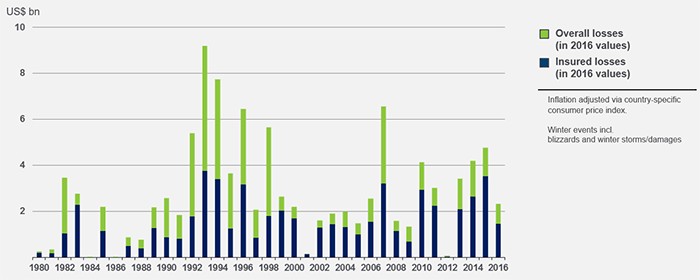
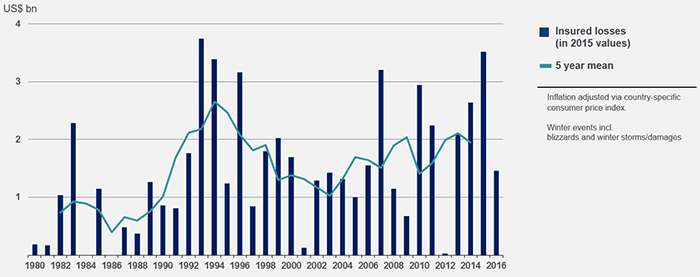
Winter storms caused an estimated $1 billion in insured losses in 2016, down from $3.5 billion in 2015, according to Munich Re. From 1996 to 2015 winter storms resulted in about $30 billion in insured catastrophe losses (in 2015 dollars), or about $1.5 billion a year on average.

Inflation-Adjusted U.S. Insured Catastrophe Losses By Cause Of Loss, 1996-2015 (1)

(2015 $ billions)

inflation graph

(1) Adjusted for inflation through 2015 by ISO using the GDP implicit price deflator. Excludes catastrophes causing direct losses less than $25 million in 1997 dollars. Excludes flood damage covered by the federally administered National Flood Insurance Program.
(2) Includes other wind, hail, and/or flood losses associated with catastrophes involving tornadoes.
(3) Includes wildland fires.
(4) Includes losses from civil disorders, water damage, utility service disruptions, and any workers compensation catastrophes generating losses in excess of PCS’s threshold after adjusting for inflation.

View Archived Graphs

Overall And Insured Losses From Winter Storms In The United States, 1980-2016

(2016 $ billions)

insured losses graph

Source: © 2017 Munich Re, Geo Risks Research, NatCatSERVICE. As of February 2017.

View Archived Graphs

U.S. Winter Storm Insured Loss Trends, 1980-2016

(2016 $ billions)

insured losses trends graph

Source: © 2017 Munich Re, Geo Risks Research, NatCatSERVICE. As of February 2017.

View Archived Graphs

Top 15 Costliest U.S. Winter Events By Insured Losses, 1980-2016 (1)

($ millions)

Losses when occurred
Rank Date Event Location Overall Insured (2) Deaths
1 Feb. 16-25, 2015 Winter storm, winter damage CT, DC, DE, IL, KY, MA, MD,
ME, MI, NC, NH, NJ, NY, OH,
PA, RI, SC, TN, VA, VT
$2,800 $2,100 39
2 Mar. 11-14, 1993 Blizzard AL, CT, DE, FL, GA, KY, LA,
MA, MD, ME, MS, NC, NH, NJ,
NY, OH, PA, RI, SC, TN, TX,
VA, VT, WV
5,000 2,000 270
3 Jan. 5-8, 2014 Winter damage, cold wave AL, CT, GA, IL, IN, KY, MA,
MD, ME, MI, MN, MO, MS, NC,
NE, NJ, NY, OH, PA, SC, TN,
VA, WI
2,500 1,700 NA
4 Apr. 13-17, 2007 Winter storm, tornadoes, floods CT, DE, DC, GA, LA, MA, MD,
ME, MS, NC, NH, NJ, NY, PA,
RI, SC, TX, VA, VT, WV
2,000 1,600 19
5 Mar. 13-15, 2010 Winter storm, floods CT, MA, NH, NJ, NY, PA, RI 1,700 1,200 11
6 Apr. 7-11, 2013 Winter storm CA, IN, KS, MO, NE, SD, WI 1,500 1,200 NA
7 Dec. 10-13, 1992 Winter storm CT, DE, NJ, NY, MA, MD, NE,
PA, RI, VA
3,000 1,000 19
8 Jan. 31-Feb. 3, 2011 Winter storm, snowstorms, winter damage CT, IA, IL, IN, KS, MA, ME,
MO, NY, OH, PA, RI, TX, WI
1,300 980 36
9 Dec. 17-30, 1983 Winter damage, cold wave FL, GA, ID, IL, IN, IA, KS, KY,
LA, MD, MA, MI, MN, MS, MO,
MT, NE, NJ, NY, NC, ND, OH,
OK, OR, PA, RI, SC, SD, TN,
TX, UT, VA, WA, WV, WI, WY
1,000 880 500
10 Jan. 17-20, 1994 Winter damage, cold wave CT, DE, IN, IL, KY, MA, ME,
MD, NC, NH, NJ, NY, OH,
PA, RI, SC, TN, VA, VT, WV
1,000 800 70
11 Feb. 10-12, 1994 Winter damage AL, AR, GA, LA, MS, NC, OK,
SC, TN, TX, VA
3,000 800 9
12 Jan. 1-4, 1999 Winter storm AL, AR, CT, DE, FL, GA, IL,
IN, LA, MO, MA, MD, ME, MS,
NC, NJ, NY,OH, OK, PA, RI,
SC, TN, TX, VA, WV
1,000 780 25
13 Jan. 4-9, 2008 Winter storm AR, CA, CO, IL, IN, KS, MI,
MO, NV, NY, OH, OK, OR,
WA, WI
1,000 750 12
14 Jan. 31-Feb. 6, 1996 Winter damage AL, AR, CT, DE, FL, GA, IA,
IL, IN, KS, KY, LA, MA, MD,
MI, MO, MS, NC, NE, NJ, NY,
OH, OK, PA, SC, TN, TX, VA,
WV, WI
1,500 740 16
15 Feb. 24-25, 2013 Blizzard, winter damage LA, OK, TX 1,000 690 1

(1) Costliest U.S. blizzards and winter storms/damages based on insured losses when occurred.
(2) Based on property losses including, if applicable, agricultural, offshore, marine, aviation and National Flood Insurance Program losses in the United States and may differ from data shown elsewhere.

.

Source: © 2017 Munich Re, NatCatSERVICE; Property Claim Services (PCS®), a Verisk Analytics® business. As of February 2017.

View Archived Tables

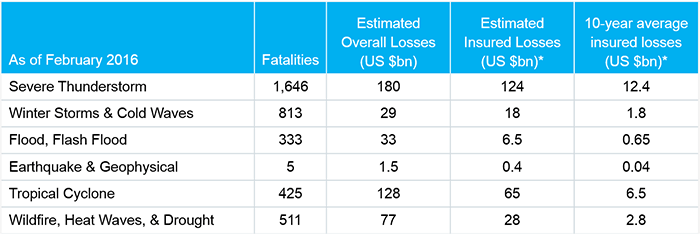
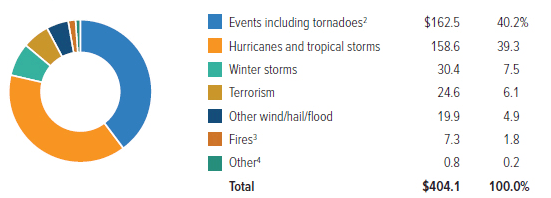
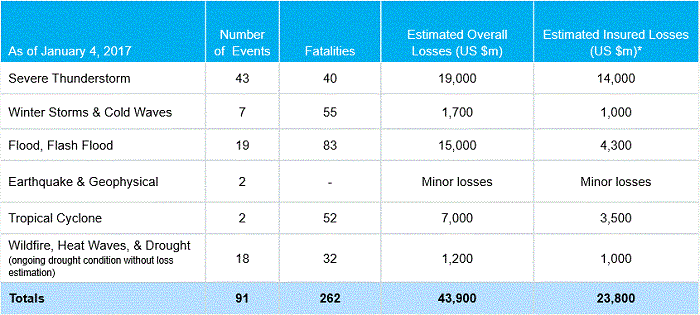
Natural Catastrophe Losses In The United States, 2016

(Based on perils)

Natural Catastrophe Losses In The United States, 2016

Source: © 2017 Munich Re, NatCatSERVICE; Property Claim Services (PCS®)*, a Verisk Analytics® business. As of February 2017.

View Archived Graphs

NATURAL CATASTROPHE LOSSES IN THE UNITED STATES, 2006-2015

(Based on perils)

Natural Catastrophe Losses In The United States, 2006-2015

Source: © 2016 Munich Re, NatCatSERVICE; Property Claim Services (PCS®)*, a Verisk Analytics® business. As of March 2016.

View Archived Graphs

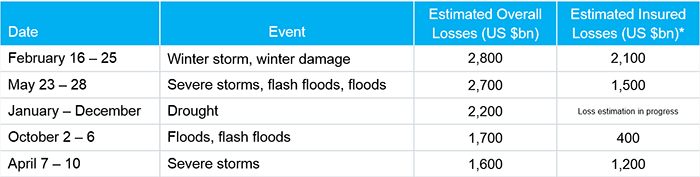
SIGNIFICANT NATURAL CATASTROPHES IN THE UNITED STATES, 2015

(Five costliest events ordered by overall losses)

SIGNIFICANT NATURAL CATASTROPHES IN THE UNITED STATES, 2015

Source: © 2016 Munich Re, NatCatSERVICE; Property Claim Services (PCS®)*, a Verisk Analytics® business. As of February 2016.

Record High’s in Temperatures, how does this affect your home?

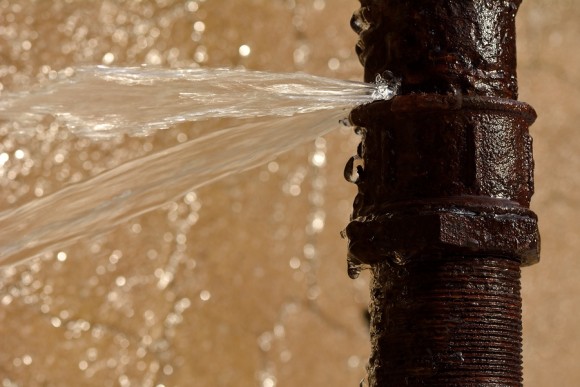
With all of the up and down temperatures recently, this comes with the consequences of pipes thawing, then freezing. Along with all of the windstorms and hail, these seem to be some of the most popular insurance claims around this time of year.

burst pipe

Weather incidents account for more than half of all homeowners insurance claims, with wind, pipes freezing and bursting, roof and flashing leaks and ice dams among the major causes of home damage during weather events.

Fire-related claims are the most expensive, however.

The five most common causes of home claims are:

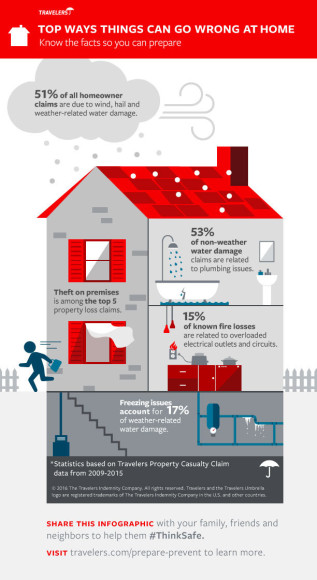
  • Exterior wind damage – 25 percent of all losses.
  • Non-weather-related water damage (e.g., plumbing or appliance issues) – 19 percent.
  • Hail – 15 percent.
  • Weather-related water damage (e.g., rain, melting ice, snow) – 11 percent.
  • Theft – 6 percent.

“Any number of things can go wrong with a home, and it’s impossible to predict them all,” said Pat Gee, senior vice president, Personal Insurance Claim, Travelers. “But if consumers focus on these particularly common risks and take preventive steps and perform routine maintenance, it may help lessen the likelihood of damage.”

home dangers infographic

Costliest Claim Causes

While weather-related claims are most common, fire causes the most expensive claims, accounting for nearly one quarter of the total claim costs. Fires are often caused by appliance and machinery misuse or failure, electrical problems, including wiring or outlet issues, and cooking. Hail, wind, and plumbing or appliance leaks followed fire as the most expensive claims.

Water Damage

There are typically two main causes of water damage — weather events, such as rain or snow melt, and other issues, such as pipes bursting or leaking. By comparison, more water damage is caused by events such as a pipe bursting, or plumbing or appliance issues, than from the weather.

Regional Differences

The leading cause of claims differs depending on where customers lived:

  • In the Northeast, wind is the most common cause of claims. The weight of ice and snow on the roofs of homes was also a common claim throughout the region. Fire is the costliest source of claims for homeowners in this area.
  • In the South, wind is the most common cause of home claims and hail is the most expensive.
  • In the Midwest and West, hail is both the most common reason for a homeowners insurance claim and caused the costliest damage. Midwestern homeowners also saw repeated problems caused by sewer or sump pump backups.

The Effects of Climate Change

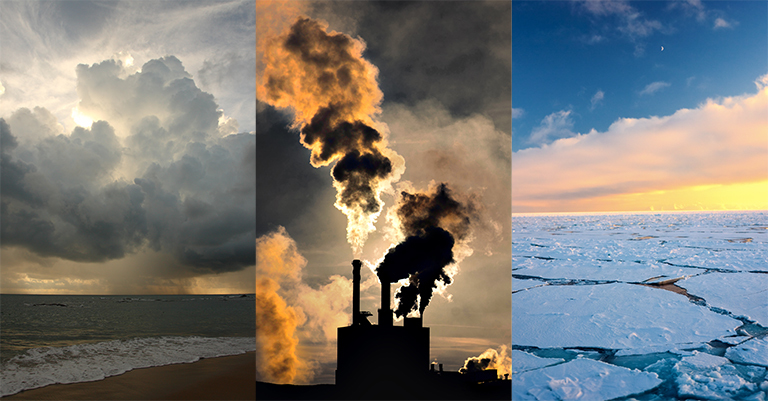
Climate change is altering weather patterns and causing an increase in the intensity and frequency of adverse weather conditions. Weather conditions such as flooding, hail and drought can affect a policy holder’s insurable assets. Climate change therefore creates risks to both movable and immovable property and one of the issues for insurers is how to underwrite the additional risks that climate change brings.Climate change can clearly lead to an increase in claims being submitted and needs to be addressed by the insurance industry.

Image result for climate change

Apart from the effects of climate change on policy holders, it can also impact on the sustainability of the insurance industry. The availability of insurance is premised upon two factors, being the “ability of the insurance industry to finance risk and the expectation that the insurance underwritten will be profitable”. Climate change can therefore pose a financial threat to the insurance industry, and management and understanding of climate change and its effect on insurable assets are crucial in ensuring the future sustainability of the insurance industry.

Neither the Long-term Insurance Act, No. 52 1998 nor the Short-term Insurance Act, No. 53 of 1998 makes provision for addressing risks arising from the effects of climate change. Despite the lack of guidance there are various measures that insurers can adopt in order to mitigate or avoid the risks posed by climate change:

  • Risk assessment will need to include climate change as a component in its management of future risk. When assessing risk, weather patterns and their potential effect on an insurable asset must be a component in an underwriter’s estimation of future risks.
  • Pricing will need to reflect the underlying weather-related risks. In this way, insurance companies can influence their customers to reduce their exposure to climatic risks through the differentiation in the pricing of insurance premiums. By way of example, a policy holder can receive a reduction in their premium if they take steps to protect their insured property against climatic risks such as flooding and hail. By the same token, a policy holder may face a higher premium if they choose to develop a project in an area prone to climatic risks such as floods and droughts.
  • Insurers can draft their policies to limit their loss in the face of weather-related risks. This can be done by limiting the scope for claims which can be made or providing that measures aimed at protecting property against weather-related risks are a necessary requirement for a claim.

The insurance industry bases their premiums on statistics of past loss and probabilities. Climate change can create uncertainty in the pricing process but insurers can develop models to assess their possible loss for any climate change related risk. It will be necessary also to collect data on climate change related risks as well to develop the resources needed to anticipate and analyze climate risks and their impact.

Climate change should not be ignored or underestimated and  will  inevitably  lead  to  change both for the insurer and the insured.

Top Property Insurance Claims That Occur in the Winter

insurance claim

The frigid temperatures and heavy snowfall in cold-weather states, along with wind and hail storms in other areas, can cause damage to homes, and in many instances result in homeowners needing to file an insurance claim.

Recently analyzed homeowner claims data from the last five full winters (December to March) and conducted an online survey of 184 of its property adjusters to find out what are the most costliest winter claims. The analysis also determined the five most common winter weather claims and the top five U.S. states for winter weather claims.

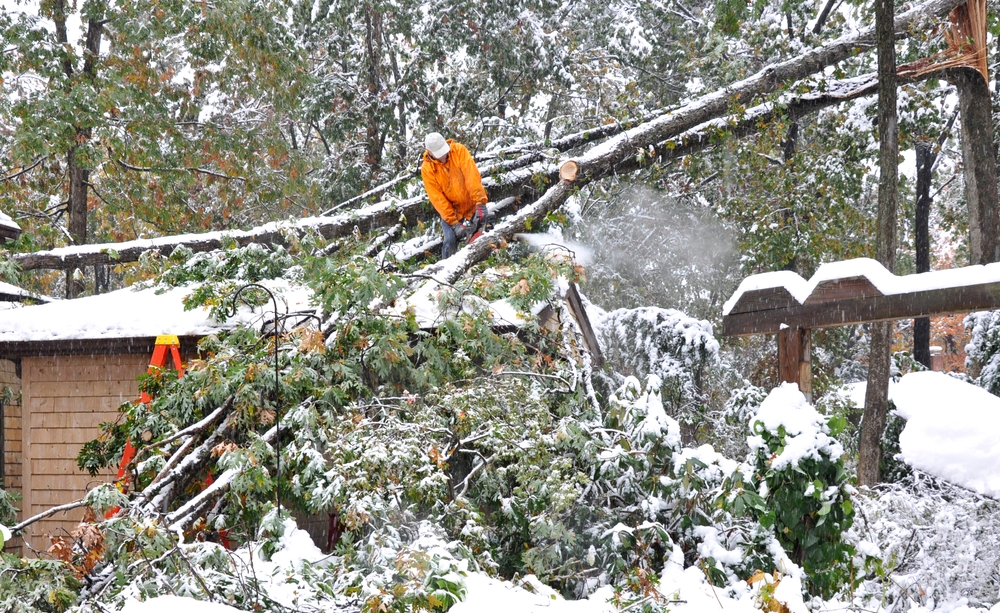
3. Tree collapse

collapsed tree

Average Claim Cost: $6,000

Tree collapses are the third most costly winter weather claim. Trees in the western U.S. are generally larger than in other parts of the country and claims in this area average more than $10,000. By comparison, tree collapse claims range on average from $3,000 to $5,000 in the northeast, midwest, and south.

Weakened tree limbs can easily come down in windy weather, so the company suggests maintaining and trimming trees near the home that could fall on the house, other buildings or vehicles, before storm season.

2. Hail damage

hail damage

Average Claim Cost: $10,000

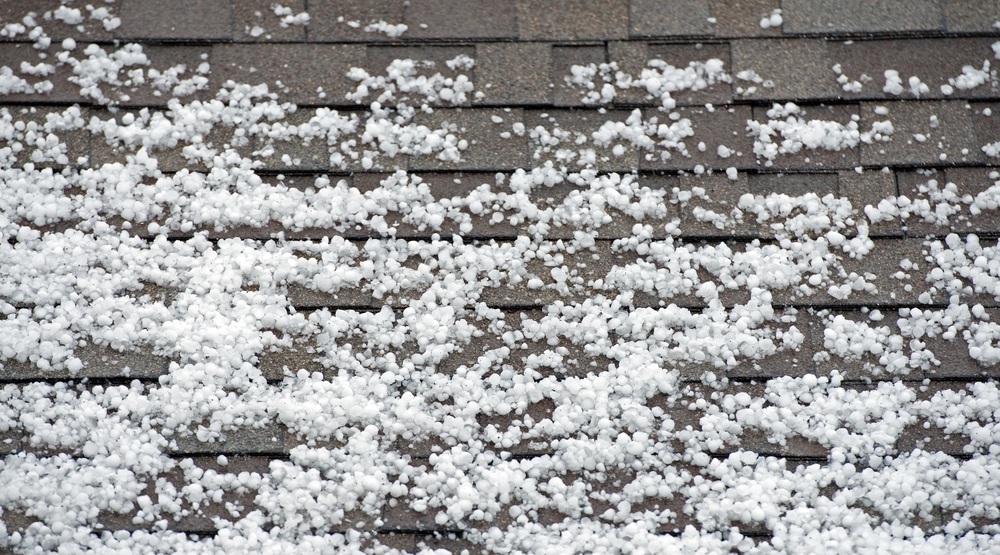
Hail damage is the second costliest winter weather claim.

In the south, it is three times more common than in other areas. Roof damage from hail is more likely at the end of winter and can lead to claims that average $10,000.

Claims for hail damage are often filed late because the damage isn’t always easy to see. After a large hail storm, a homeowner may want to consider hiring a professional to examine the roof if they’re not able to safely inspect it.

1. Frozen pipes

frozen pipe

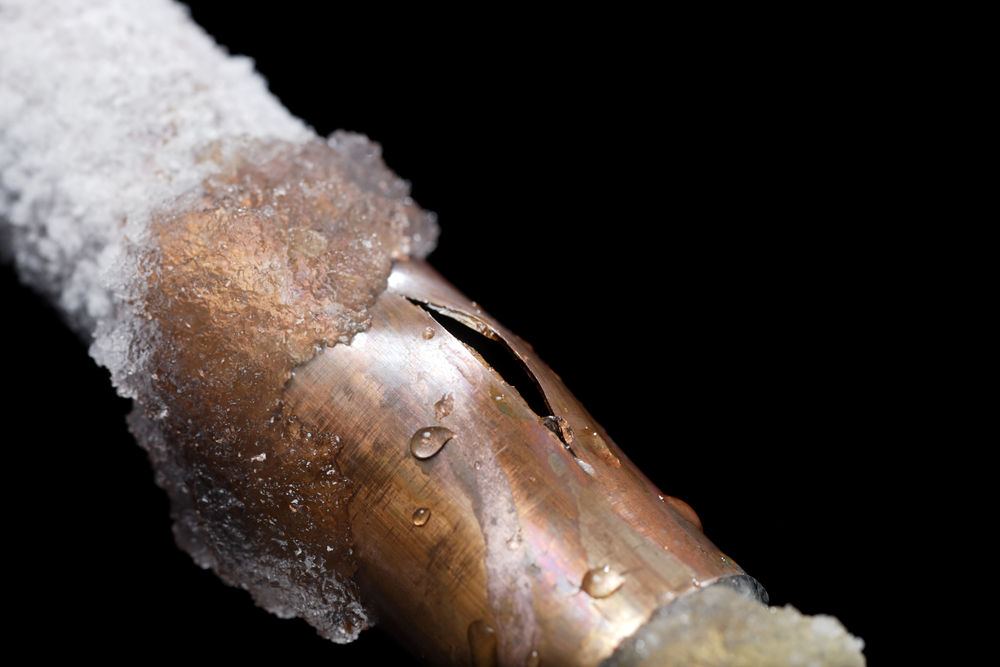
Average Claim Cost: $18,000

While most common in the northeast and midwest, frozen pipes happen in all areas of the country and average about $18,000 per claim.

A homeowner may need to find a service company to help clean up the mess, which may help save money and prevent further damage.

To help homeowners prepare for the worst winter can throw at them, we suggest the following tips:

  • Perform seasonal maintenance: Have the heating system serviced on an annual basis, including testing to make sure the heat is working throughout the home. It’s also important to insulate any pipes that are susceptible to freezing and unhook hoses from outdoor faucets.
  • snow maintenance
  • Prepare for winter storms: Move vehicles off the street and/or away from large tree limbs. Have the snow blower serviced. Become familiar with how to trip the manual release on overhead garage door openers and have shovels ready ahead of the storm.
  • Stock up on supplies: In the event of an extended power outage, have bottled water and non-perishable foods, clothing and blankets, batteries and flashlights. It’s also helpful to have a supply of rock salt, other ice melt or sand, in case the stores run out during a storm .

Smart insurance New Year’s resolutions !


BY:Emmet Pierce

The exercise equipment gathering dust in Americans’ bedrooms and basements is a familiar sign of the way New Year’s resolutions often are quickly abandoned. But a few resolutions you’ll not only want to make but also stick with involve being more prudent about insurance.

That means spending wisely and getting the coverage that matters most. It’s a good idea to start each year by taking stock of your coverage because auto, home, life and other insurance needs change over time — as you move, switch jobs, add to your family, change vehicles and grow older.

When you have to use your insurance, the last thing you want is to learn that you don’t have enough coverage. But you also want to make sure you aren’t carrying more insurance than you really need.

Here are some New Year’s resolutions to help you fine-tune your insurance policies.

Resolve to be smarter with insurance

Because auto insurance premiums may be tied to how often you drive and to your vehicle model, make certain you’ve alerted your insurer to any changes in driving habits, says Ron Moore, a senior product manager for MetLife Auto & Home.

Consumers should “make sure their policy accurately reflects how their vehicles are used,” he says. “Back when gas prices were low, we wanted to take the big luxury car to work. Now, with gas at $4 per gallon, you’re driving the compact, and that can make a difference.”

Consider dropping collision and comprehensive coverage on older vehicles to save money, he adds. Collision pays the costs of repairing cars following accidents, while comprehensive pays for losses not caused by accidents, such as theft or fire damage. Since your insurance company will repair or replace only up to the value of the vehicle, paying for full coverage on an aging car may not be worth it.

Another great resolution is to drive carefully, says Pete Moraga, spokesman for the Insurance Information Network of California.

“The most important thing that determines what you pay for auto insurance is your driving record,” he says. “Observe the law.”

Auto insurance

The start of a new year is a great time to update the inventory of your possessions. You’ll need an accurate list if you ever have to make a home insurance claim.

“You probably have received (holiday) presents, and there are new things in the house,” says Ron Moore, senior product manager with MetLife Auto & Home. “Some of them could be worth a lot: your TV, your stereo, your computers, your clothes.”

If you don’t want to take time to write things down, “a very common way is to make a video recording of your home,” he adds. “If there is a theft, you can go back and say ‘I had this stuff.'”

Consider a special rider to cover expensive items that may exceed the limits of your home policy.

“If you have a big flat-screen TV that costs $1,000, you may want to schedule that separately,” Moore notes. “The cost for a rider is usually pretty cheap. You can make sure your TV is covered for everything, including your 6-year-old kid hitting a ball through it.”

Finally, make sure your home insurance coverage remains high enough if you ever have to repair or rebuild at today’s construction prices.

Home insurance

As you launch into a new year, look for ways to cut life insurance costs, says Debra Newman, who chairs the board for the nonprofit Life and Health Insurance Foundation for Education, or LIFE.

“Have you become healthier?” she asks. “Did you stop smoking? Did you lose a significant amount of weight? Are you off medications? You may now qualify for preferred rates.”

If you’re the family breadwinner, it’s a good idea to make sure a nonworking spouse or domestic partner also has adequate coverage. The main reason for life insurance is to replace lost income, but a homemaker’s work has value, too. “Think about what your partner does in any given month to keep your family functioning,” Newman says. “You would have to replace that expense.”

Kristen Komer, a MetLife vice president, suggests checking A.M. Best Co. ratings or other indicators of your life insurance company’s financial health, to make sure it has the assets to pay your beneficiaries when you die.

“With all the changes that have happened in financial markets, it has never been a more important time to check the financial strength of a company,” Komer says.

Life insurance

Want to trim your health insurance costs in the new year? The best way is to resolve to become more educated and informed about your health care, says Martin Rosen, co-founder of Health Advocate Inc., a company in Plymouth Meeting, Pa., that helps consumers navigate the health care system.

For healthy people who rarely go to the doctor, it may make sense to seek lower premiums through a higher insurance deductible.

“You could be paying a lot of money to get a richer benefit package and you may not use it,” Rosen says. “Most people want to protect themselves against catastrophic medical costs. … People are starting to realize, if they do the numbers, they will save a lot of money and they still will have decent coverage.”

If you have no health insurance, minimal insurance or a high-deductible plan, you may be able to save money by negotiating whenever you receive a medical bill, Rosen adds. The key is to not be shy about asking for a break.

“Ask in a polite way, ‘Is there an opportunity to reduce the bill?'” he says. “Will every doctor or hospital give a discount? No, but some will.”

Health insurance

According to the Federal Emergency Management Agency, or FEMA, 90 percent of major natural disasters in the U.S. involve flooding. Yet many at-risk homeowners choose to roll the dice and skip flood insurance.

With the widespread flood damage from Superstorm Sandy fresh in your mind, you should resolve to buy flood coverage if there is a moderate chance that your home could be damaged by rising waters during a storm. Your homeowners or renters insurance probably doesn’t cover flooding.

Pete Moraga, spokesman for the Insurance Information Network of California, warns that floods can occur in unexpected places. “Sandy came along and proved it.”

Don’t assume federal aid will bail you out after a flood. If you are not in a declared disaster area, you may be on your own for repairs, unless you have flood insurance.

Policies that are available through FEMA’s National Flood Insurance Program will provide up to $250,000 in coverage for the structure of your home and insure the contents for up to $100,000.

Flood insurance

California is considered the state most at risk from earthquakes, but there are other regions of the U.S. where damaging shake-ups can occur. Like flooding, earthquakes are not covered by most residential insurance policies. Assessing your need for a special earthquake insurance policy should be high on your list of New Year’s resolutions.

“An earthquake will happen in California, and we are seeing them in other states,” says Pete Moraga, spokesman for the Insurance Information Network of California. “California is the epicenter of earthquake country, but just 11.3 percent of (the state’s) homeowners have earthquake coverage. Businesses have 6.67 percent. When we have another earthquake, who is going to pay?”

A 2011 report from the Congressional Research Service warned about “potentially large losses” from earthquakes due to new development in seismically active areas and the inability of aging structures to withstand quakes.

Moraga worries that efforts to educate homeowners and businesses about the need for earthquake insurance are falling short nationwide. Nearly 75 million people in 39 states are at some risk from earthquakes, according to the U.S. Geological Survey.

Earthquake insurance

Holiday Safety Tips!

Holiday Safety Tips

Candles, lights and decorations are an essential part of the holiday season. Unfortunately, they also increase the risk of fire and injury. Each year fires occurring during the holiday season injure nearly 3,000 individuals and cause over $900 million in damage.*

To have a safe and healthy holiday season, the Insurance Information Institute (I.I.I.) recommends following these important safety tips:

Christmas trees

  • Pick out a freshly cut Christmas tree – one that is too dry can easily catch fire. Trim at least one inch from the bottom of the tree; this will increase the tree’s ability to absorb water. Live trees need a lot of water so check the water level and refill often.
  • Place the tree in a secure stand designed to hold the weight of the tree. Never place a Christmas tree near a heat source such as a fireplace, radiator or stove. Do not use candles to decorate a tree. And never go near a tree with an open flame such as a candle, lighter or matches.
  • Dispose of the tree when it becomes dry, or when the needles begin to fall off in large quantities. Never burn old trees or needles in a fireplace or wood-burning stove. Instead, take it to a recycling center or have it removed by a community pick-up service.
  • If you buy an artificial tree, make sure that it is made of fire-resistant material.

Decorations and lights

  • Do not overload electrical sockets by plugging too many cords into a single outlet. Always unplug holiday lights when no one is home or when everyone goes to sleep for the evening. Use only Underwriters Laboratories (UL) approved lights. Inspect old light strands for any cracks, frayed edges or bare spots. Throw out any damaged chords.
  • When decorating a tree with lights, fasten them securely to the tree and make sure that no bulbs come in contact with needles or branches. Check wires regularly. If they become warm, unplug the lights immediately.
  • Never use indoor lights outside. They are not designed to withstand the elements and if they get wet, can cause an electric shock. Remove outdoor lighting as soon as the season is over. Even specially created outdoor decorations are not designed to withstand prolonged exposure to the elements.
  • Do not block exit paths to doors or fire escapes with Christmas trees or other decorations.

Fireplaces

  • Never burn wrapping paper in the fireplace. This may release fire-starting embers or produce a build-up of dangerous chemical fumes in the home.

Entertaining

  • If you entertain guests who smoke, provide large ashtrays and check for cigarette butts in upholstered furniture before going to bed. Cigarette fires are a leading cause of fire fatalities in the home.
  • Do not leave the stove unattended when cooking. In the excitement of entertaining, it is easy to forget something on the stove and leave it to burn, causing a potential fire hazard.

Children and pets

  • Place all ornaments and candles out of reach of small children and pets. Small or breakable ornaments can be easily knocked down, which can result in cuts or choking. Curious children and playful pets can topple a tree in seconds causing serious injury.
  • Beware of toxic decorations. Mistletoe and holly berries may be poisonous if more than a few are swallowed. Old tinsel may contain lead so discard old tinsel if you are not sure of its composition. Fire salts (which produce a multi-colored effect when thrown on burning wood) contain heavy metals, which if swallowed may cause serious gastrointestinal problems and vomiting.

Candles

  • Check candles frequently to make sure they do not burn down too far or drip hot wax. Make sure candles are placed in sturdy, non-combustible holders away from decorations and other combustible materials.
  • Clean and trim candlewicks to 1/8 inch to 1/4 inch before lighting. Long or crooked wicks cause uneven burning and dripping. Candles should be placed at least three inches apart so they do not melt onto one another. Keep candles free of wick trimmings, matches or any flammable material that might ignite.
  • Never leave candles burning unattended. Remember to snuff out all candles when leaving a room or before going to sleep.

Give your family the priceless gift of safety this holiday season. Prepare for the New Year by getting into good safety habits and teaching family members what to do in a fire or other emergency. Print a list of emergency phone numbers such as the poison control center, and police and fire departments and place them near the telephones in your home. Make sure that smoke detectors and fire extinguishers are in good, working condition.

You may also want to consider installing a sophisticated alarm system that, in the event of an emergency, rings at an outside service to contact the fire, police or local emergency medical service.