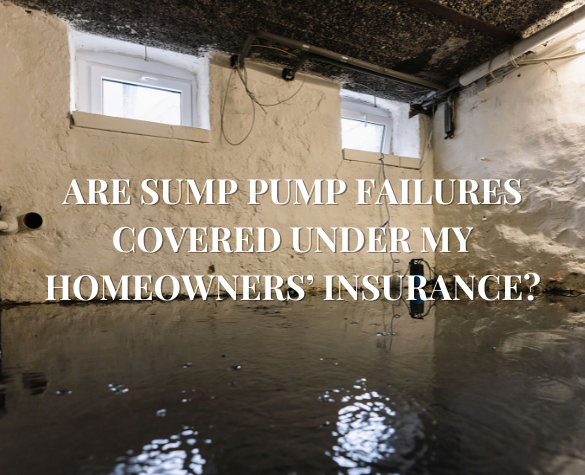
As the president of a 35-year-old Public Adjustment firm, I often get asked, “Are sump pump failures covered under my homeowners’ insurance?” Well, the answer is maybe!
Let’s start with a basic understanding of water damage and homeowners’ insurance coverage. Except for the basic fire and lightning policy such as the HO-1, most homeowner insurance policies cover water that escapes the home’s plumbing systems such as water heater breaks, broken pipes and toilet overflows. (HO-2, thru HO-5)
What Insurance Companies Define as Flooding
When water hits the ground first and then enters the house, such as melting snow or rain, it is referred to as ground or surface water. Ground and surface water are excluded under all homeowner’s insurance policies. When water enters your home from a municipal sewer line, such as a sewer backup, that, too, is excluded from coverage.
However, just about every insurance company out there lets the policyholder buy back some of that excluded coverage with a “Sewer and Back Up” endorsement or in layman’s terms a “Sump Pump Rider”. Most Insurance companies allow you to “Buy Back” a certain dollar amount of coverage if the water overflows from a sump pump or drain.
(As long as the water doesn’t come from a basement window or through the basement walls)
Insurance Coverage to Consider
If your basement is unfinished and contains few belongings, you may get by with a low $10,000 limit or basic clean-up and drying costs. If your basement is finished and has a lot of furniture, your limits should be more like $50,000 or greater.
It’s understandable if all this information seems overwhelming. That’s why it’s important to communicate your specific needs to your Insurance Agent. If you have any questions about your coverage, don’t hesitate to call our office.
Hurricane season has just started, so now is a good time to point out what you should do if one is headed your way. Here are the Top 15 things to consider before a storm hits:
Restock your emergency preparedness kit. Include food and water sufficient for at least three days, medications, a flashlight, batteries, cash, and first aid supplies.
Plan how to communicate with family members if you lose power. For example, you can call, text, email or use social media. Remember that during disasters, sending text messages is usually reliable and faster than making phone calls because phone lines are often overloaded.
Review your evacuation zone, evacuation route and shelter locations. Plan with your family. You may have to leave quickly so plan ahead.
Review insurance policies and catalog belongings.
Collect and safeguard critical financial, medical, educational, and legal documents and records. Make copies and safeguard, if you have time.
Back up electronic data. This is best if done offsite or through cloud storage.
Pack a “go bag” to bring with you if you have to leave quickly.
Keep your car in good working condition and keep the gas tank full; stock your vehicle with emergency supplies and a change of clothes.
Bookmark your city or county website for quick access to storm updates and emergency instructions.
Bring loose, lightweight objects inside that could become projectiles in high winds (e.g., patio furniture, garbage cans); anchor objects that would be unsafe to bring inside (e.g., propane tanks); and trim or remove trees close enough to fall on the building.
Consider covering all of your home’s windows. Permanent storm shutters offer the best protection for windows. A second option is to board up windows with 5/8” exterior grade or marine plywood, cut to fit and ready to install.
Charge your cell phone now so you will have a full battery in case you lose power.
If you’re not in an area that is recommended for evacuation, plan to stay at home or where you are and let friends and family know where you are.
Turn your refrigerator or freezer to the coldest setting and open only when necessary. If you lose power, food will last longer.
Keep a thermometer in the refrigerator to be able to check the food temperature when the power is restored.
If a storm does cause any damage to your property, please reach out to us. We are always here to help.
Winter can bring about various dangers and cause damage to you and your home. Here are some common winter hazards that you should be aware of:
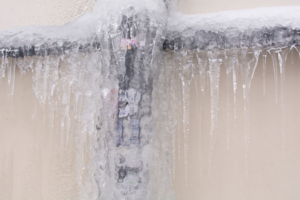
Frozen Pipes: Extremely cold temperatures can cause water pipes to freeze and burst. To prevent this, insulate pipes, keep faucets dripping during very cold nights, maintain adequate heating in your home, disconnect exterior hoses in the winter.
Ice Dams: Accumulation of ice on the roof can lead to ice dams. These dams can prevent melting snow from draining off the roof, causing water to seep into the home. Adequate insulation and ventilation in the attic can help prevent ice dams. If you think this maybe a problem at your home, consider heat tape for the gutters or over roof soffits.
Roof Damage: Heavy snow accumulation on the roof, combined with ice and freezing temperatures, can lead to roof damage. Regularly remove snow from your flat roof to prevent excessive weight and potential frozen scupper/drain boxes and other structural issues.
Furnace Issues: Your heating system works harder during the winter, and it’s essential to have it serviced regularly. Change filters, check for leaks, and ensure that the furnace is functioning efficiently.
Carbon Monoxide Leaks: Cold weather often leads to increased use of heating appliances, which can increase the risk of carbon monoxide leaks. Ensure that carbon monoxide detectors are installed and functioning correctly.
Chimney Fires: If you have a fireplace, it’s crucial to have the chimney inspected and cleaned regularly to prevent the buildup of creosote, which can lead to chimney fires.
Power Outages: Winter storms can result in power outages. Have an emergency kit with essentials, such as flashlights, batteries, blankets, and non-perishable food items.
Tree Limb Damage: Ice and snow can weigh down tree limbs, leading to breakage. Trim tree limbs that pose a risk to your home. You can minimize these damages by consulting a certified Arborist to advise you on the maintenance of the trees on your property.
Gutter Issues: Clogged gutters can lead to ice dams and water damage. Consider installing gutter guards to prevent debris buildup and heat tape to eliminate ice buildup. Inspect the angle of your gutter to ensure proper drainage.
Regular maintenance and preparation can help minimize the risks associated with winter weather and protect your home from potential damage.
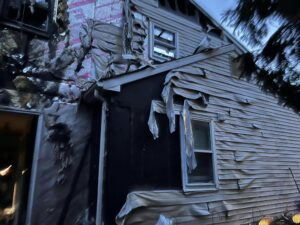
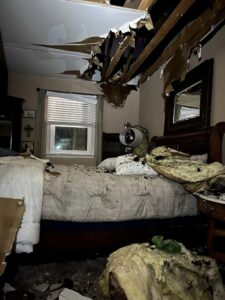
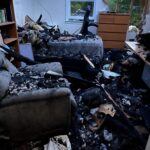
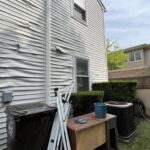
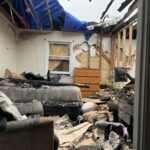
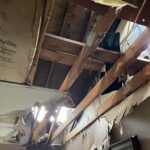
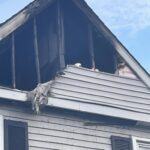
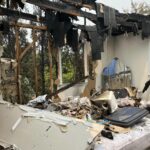
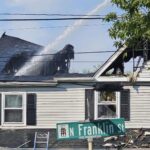
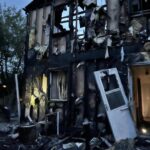
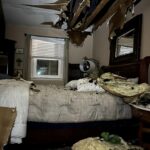
I’m not sure if you heard about the Franklin Street fire in Doylestown. There were four families affected by this tragedy and Property Adjustment Corporation is handling all of the claims.
Unfortunately, one those impacted was the mother of our very own Samantha who’s mother’s childhood home that was connected to the twin where it originated. Nothing is salvageable and both will likely have to come down.
Thankfully everyone is safe included all the pets that had to be rescued.
The upside: they are all in amazing hands now. Everything is under control and running smoothly. We met with Fire Marshall, fire investigators, restorations company for emergency services, insurance company and adjusters for dwelling & contents, etc.
We also assisted with temporary housing and all families are in a hotel until longer term housing can be found.
I can’t even begin to explain how much is involved when a tragedy like this happens.
All of these families now have peace knowing Property Adjustment will be their voice! They have all expressed over and over how they couldn’t imagine doing this themselves.
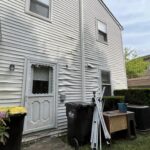
I wanted to share a few pictures from all the claims.
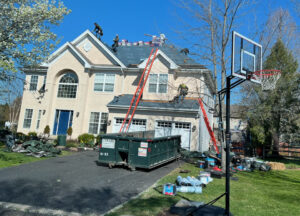
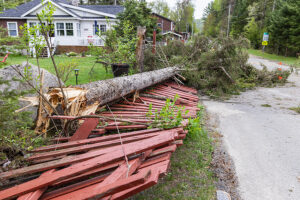
Heavy storms blew through our area this week causing unfortunate damage. As you assess the condition of your home and those of your neighbors, remember that we are here to assist you.
Let us deal directly with the insurance company. Spare yourself the time and aggravation of handling the claim yourself. Our professional staff is available to assist you 24 hours a day, 365 days a year, with every aspect of the claim process.
Since 1989, we have settled millions of dollars in property damage claims for our clients. Each member of our team of licensed and accredited adjusters brings more than 20 years of experience to your claim. We are experts in assessing property damage, interpreting insurance policies, and helping you receive the best and fair settlement.
It’s been a little bit of time since April Storms ripped through our area.
The office phone began ringing like crazy with homeowners that were not aware of Property Adjustment Corporation at the time of the storm and instinctively called their Insurance Company immediately after the storm.
These homeowners waited several weeks just to have a roaming storm adjuster from another part of the country come out look at their damages, only to send them an estimate to repair their home close to the policy’s deductible. Now they want us to fix it and help get them what it will really cost to repair their home.
Property Adjustment Corporation has exceeded expectations with the settlements we have been obtaining for our clients – like the recently settled claim where the family was told their damages didn’t exceed the policy deductible and I got over $60,000 for a simple wind loss.
A great outcome is more probable when we have been controlling the claim from the onset. The good news is that most times we can fix it, but it is a lot more work than if we were handling the claim from the beginning. We must charge a little more for the difficulty. It’s always better to let us handle your claim from the start.
Recently I was asked “What’s the difference between you, a public adjuster, and an adjuster from my insurance company?” I thought for a bit and answered, “If you want your roof patched after the windstorm then call your insurance company, if you want a new roof call me. You are entitled to both, but the choice is yours.”
You may not realize it at the time, but the decisions you make hours and even days after your home has experienced sudden and traumatic damage can affect your quality of life for years. That is because insurance adjusters work for the insurance company and are looking out for the company’s financial interests. Their job is to literally help the insurer spend as little as possible while still honoring the policy. If that’s the case, then who is looking out for your interests? That is where a public adjuster like Property Adjustment Corporation (PAC) comes in.
What is a Public Adjuster?
A public adjuster is an insurance professional who works for the policy holder to help settle an insurance claim for property loss or damage. Public adjusters have no relationship with the insurance company and legally represents the policyholder (that’s you!). At PAC for example, we aid and assist our clients to make the right choices in handling their homeowner’s insurance claim, which results in the highest possible settlement.
An Example of What PAC Does
Say your home has fire damage, Property Adjustment Corporation can help you find fire damage professionals that will clean and secure your home for the rebuild paying careful attention to your
salvageable belongings. We will help arrange for suitable accommodations for your family and pets while your home is cleaned and rebuilt. Our trained staff will sift through the burnt debris to carefully prepare a detailed itemized list of your personal property to present to your insurance company. We will leave no item unaccounted, pricing your belongings at today’s market cost. Finally, our estimators will produce your own structural rebuild estimate for the insurance company based on your policy coverage.
Why Time Matters
Although we often help home and business owners after their insurance says their claim is not covered or offers too little to fix their property, sometimes it is not always possible. If the damages were presented incorrectly or something is said that goes against how the policy works, we may not be able to save the claim. To better your odds of success, get us involved immediately after the damage occurs.
Our assessments of damages are free of charge and without obligation, so why not let us see if we can help.
So, that is the difference between a public insurance adjuster and an insurance company’s adjuster – one is looking out for your interests, the other is looking out for the company’s. Our slogan at Property Adjustment Corporation is: “We Make Things Right.” We explain your rights and coverage to you and keep your insurance company accountable, every step of the way. And, if you have any questions or concerns throughout your claim process, your adjuster is only a phone call away. And feel free to contact us and schedule a free damage inspection and policy review.
Kevin Kaufmann has earned the distinction S.P.P.A. Senior Professional Public Adjuster, having founded Property Adjustment Corporation in 1990. Kevin is certified in Property Claims and Commercial Fire Coverage and is trained in Commercial Building Restoration. He is a licensed public adjuster in Pennsylvania, New Jersey, New York, Maryland, Delaware, North Carolina, and Florida and is an active member of the National Association of Public Adjuster as well as the Mid-Atlantic Association of Public Adjusters.
Now that winter is approaching, it is important to be aware of what your Homeowner’s insurance does and does not cover when it comes to winter damages. One of the most common problems – as well as one of the most preventable – is frozen pipes. This is one of those cases that a little bit of investment in time and materials can save headaches and money over the long term.
Keep the Heat On
Most insurance policies cover pipe replacement and water damage from burst pipes; however, the coverage may not apply if you turned the furnace off for the winter without first winterizing the house and its contents. This is especially important to know if you are a “snowbird” or own a summer vacation home, but it even applies if you are just going away for long weekend in the winter. If possible, keep the thermostat set at 55° F while you are away. The cost of replacing a burst pipe and the subsequent damage it causes far outweigh the cost of your utility bill.
When in Doubt, Insulate
You know where the cold spots are in your house. Attics, basements, garages, and crawl spaces are noticeably colder than the rest of the home when the temperature drops. If there are pipes in those areas and you are uncertain that the temp will stay above freezing (32° F) during the coldest times, add insulation. If rolled or blown insulation is not practical, insulate the pipes themselves. There are pipe insulating products available at your local hardware store like pipe insulation tubes (think thinner pool noodles) or fiberglass insulation pipe wrap that are inexpensive but effective prevention measures. Also, don’t forget to insulate pipes close to exterior walls like the pipe leading to your hose bib and seal with caulk or spray foam insulation any gaps or cracks in exterior walls where pipes or cables come into the house from the outside.
Burst pipes from freezing is one of those “an ounce of prevention is worth a pound of cure” scenarios. And if you are not sure what type of homeowners policy you have and what it covers, call us and we would be more than happy to review your policy with you. It is important for you to understand what is covered before your house suffers Winter damage so you can take preventative measures and avoid surprises and headaches if you do file a claim. But in the event you do need to file a claim, call Property Adjustment. We act as your advocate to ensure that the insurance company is paying your claim properly and fairly.
Vacation Preparation: Unoccupied Homes Are an Increased Risk for Theft, Vandalism, Fire, and Water Damage
Summertime means vacation, but did you know that unoccupied homes are at an increased risk for theft, vandalism, fire, and water damage? Like most things in life, the best protection is preparation. Taking a few simple precautions before you leave can dramatically reduce your risk for damage and theft and allow you the peace of mind to allow you to relax and enjoy your time away.
Interior
Reduce risks around the house by unplugging small appliances, TVs, and other devices that can short out and start a fire. Avoid water damage by turning off your water to prevent damage from broken pipes, leaks, or running toilets.
Make Your House Looks Lived In
Purchase timers and set them up to turn on and off at different times during the evening (this is good practice even when you are not on vacation.) Before you leave, make a final check to ensure your windows and doors are locked and curtains and shades are drawn.
Remember to hold your mail and newspaper deliveries so they don’t stack up. Mow the lawn and water plants before you leave or, if you are going to be away for an extended period, hire a landscaper or neighbor to keep up with it. If you have motion sensing outdoor lights, make sure they are working properly and, if you own a pool, make sure it is covered and secure.
Have Backup
Have someone keep an eye on the house. Tell a friend or neighbor that you will be away and ask them to look out for anything unusual. Give them a key to the house so they can check if they sense a problem and make sure they have your number so they can contact you if there is.
Your vacation should be worry-free which is why it’s a good idea to prepare your home before you leave for your trip. But in the event you do need to file a claim, call Property Adjustment. We act as your advocate to ensure that the insurance company is paying your claim properly and fairly.
With the winter snows melting and the spring rains not far behind, now is a good time to address water damage around the home. Water damage is one of the most common homeowners insurance claims nationwide, costing billions of dollars annually. Water damage can happen at anytime of the year and oftentimes is inescapable, but there are several proactive, preventative steps you can take to safeguard against some of the most common and avoidable problems.
5 Inexpensive Jobs to Avoid Water Damage
There are a number of relatively easy and inexpensive jobs that any homeowner can do to lessen the likelihood of snow melt and spring rains seeping into the home:
Caulk and seal windows to guard against water seepage.
Inspect your roof for missing, damaged, and aging shingles or dislodged flashing. If you notice something that doesn’t look right, contact a roofing contractor to assess the damage and make repairs.
Check your downspouts. Remove leaves and debris that may have accumulated in downspouts and gutters. Position and extend downspouts so that they direct water away from the house. If you have standing water after a rain, contact a landscaper to grade the area and channel water away from the foundation.
Install gutter guards to prevent clogs and keep water flowing away from the house instead of accumulating on the roof. Gutter guards are inexpensive and available at most DIY and hardware stores, but if you are uncertain about heights, contact a roofing/gutter professional.
Check sprinklers and irrigation systems to be sure they are not creating water damage to the walls and foundations of the house. Turn off and drain outside faucets in winter to protect against frozen pipes.
Different Types of Water Damage Are Insured Differently
Like most everything in homeownership, steps taken to prevent common problems help avoid surprises and headaches and saves money in the long run. It is also important, however, for you to understand what is covered and not covered before your house suffers water damage. As a rule of thumb, water that comes from the top down such as rainfall, ice dams on the roof, or burst sprinklers is covered by a standard homeowners policy. Water that comes from the bottom up, from an overflowing creek or river, for example, is not, but is covered by purchasing a separate flood insurance policy. If you are not sure what type of policy you have and what it covers, call your agent for an explanation
If you do need to file a claim, please give us a call at 877-355-3473 – we promise a timely response, courteous service, and guarantee you will have a higher settlement payment with our services than with working with insurance alone.


 Unfortunately, one those impacted was the mother of our very own Samantha who’s mother’s childhood home that was connected to the twin where it originated. Nothing is salvageable and both will likely have to come down.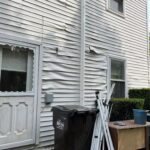


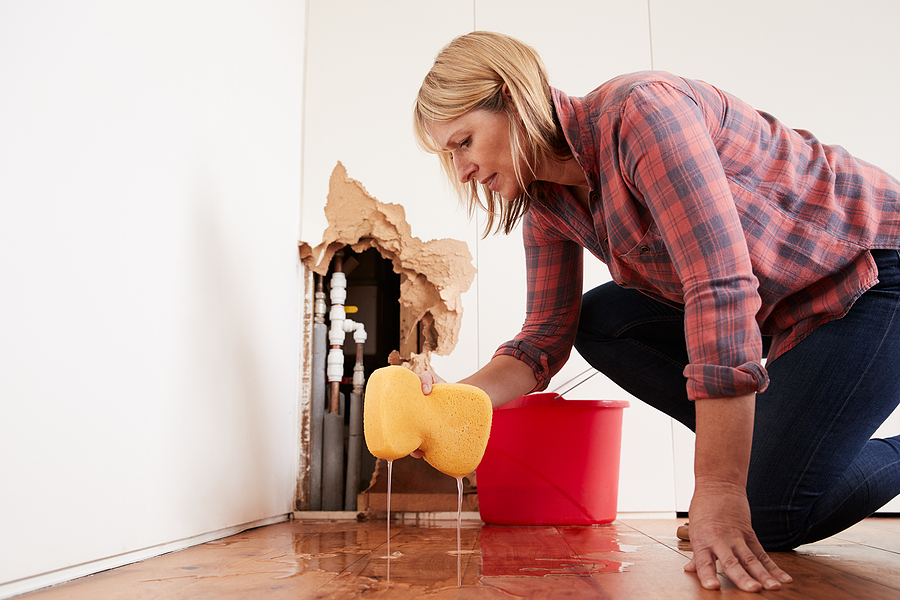



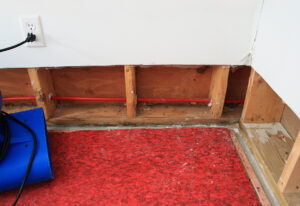 Like most everything in homeownership, steps taken to prevent common problems help avoid surprises and headaches and saves money in the long run. It is also important, however, for you to understand what is covered and not covered before your house suffers water damage. As a rule of thumb, water that comes from the top down such as rainfall, ice dams on the roof, or burst sprinklers is covered by a standard homeowners policy. Water that comes from the bottom up, from an overflowing creek or river, for example, is not, but is covered by purchasing a separate flood insurance policy. If you are not sure what type of policy you have and what it covers, call your agent for an explanation


